
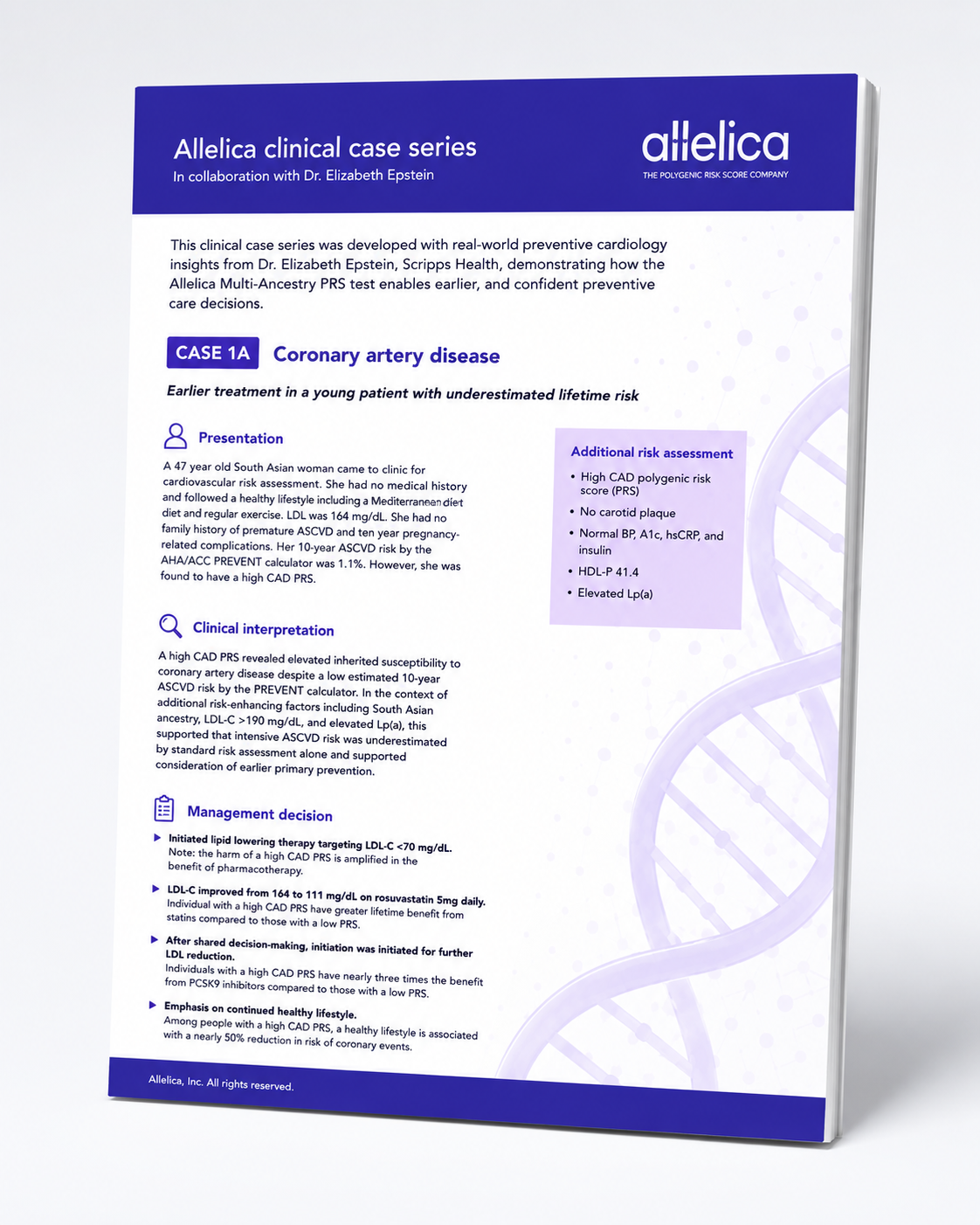
CLINICAL CASE STUDY SERIES
How PRS is integrated into clinical practice
- Four real-world patient cases demonstrating clinical implementation across coronary artery disease, Alzheimer's disease, and breast cancer.
- Practical guidance on clinical interpretation and management decisions, demonstrating how PRS complements traditional risk assessment.
- Developed in collaboration with Dr. Elizabeth Epstein, at Scripps Health.

Access the clinical case study series
Discover what Allelica brings to clinical practice
2026 ACC/AHA guideline-aligned PRS
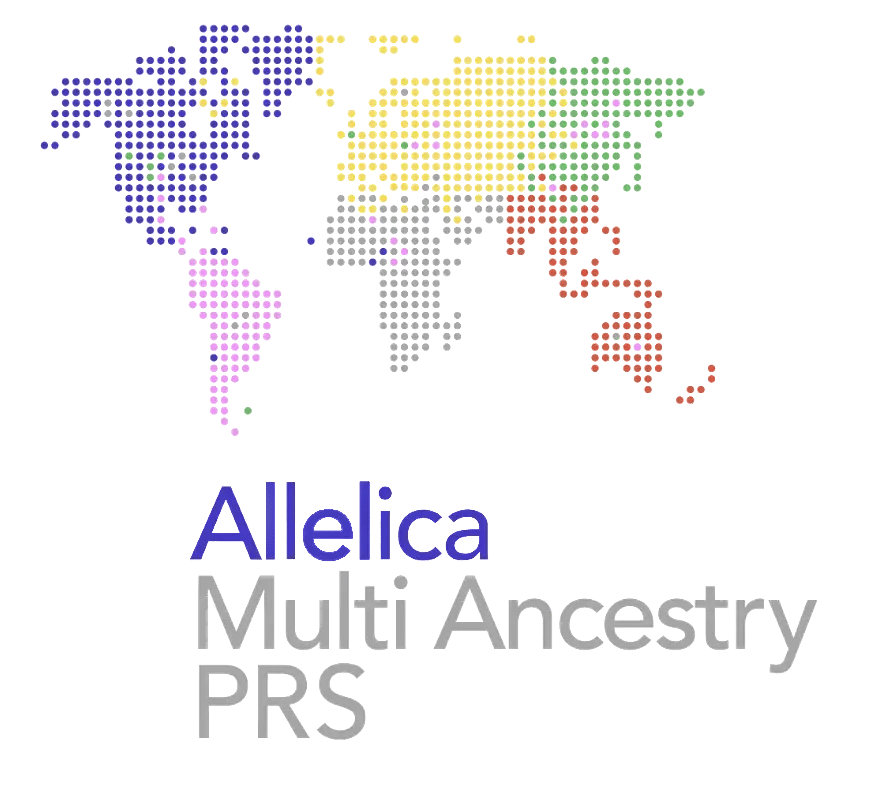
Allelica Multi-Ancestry PRS is cited in the 2026 ACC/AHA Guidelines.
Genome-wide genetic risk assessment
Integrates thousands of genetic variants to quantify inherited disease risk.
Multi-Ancestry PRS
Validated across diverse populations to provide equitable, clinically actionable risk stratification.
Earlier identification of high-risk patients
Identifies patients who may benefit from earlier preventive intervention beyond traditional risk assessments.
Monogenic + polygenic assessment in one test
Combines ACMG and NCCN guideline-recommended monogenic testing with clinically validated Multi-Ancestry PRS in a single test.
Seamless clinical workflow
Easy ordering, comprehensive logistics and billing support from test request to report delivery, reducing the administrative burden for providers.
Clinician-ready reporting
Provides clear risk stratification and interpretation to support clinical management.
Insurance support available
To support patient access, the Allelica team works directly with patients and insurance providers to assist with reimbursement support, billing coordination, and financial assistance.
Bring PRS into your clinical practice
Learn how Allelica helps healthcare providers integrate Multi-Ancestry PRS into routine clinical practice to support personalized risk assessment and clinical decision-making.